Sierra Nevada
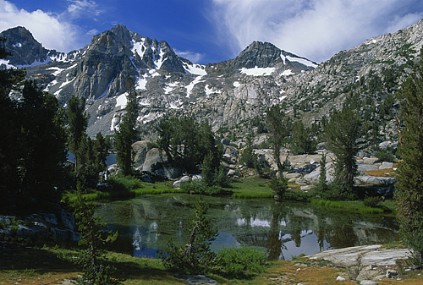
The Sierra Nevada Mountains is a mountain range in California and
Nevada, between the California Central Valley and the Basin and Range
Province. The Sierra Nevada mountain range runs 400 miles
north-to-south, and is approximately 70 miles across east-to-west.
Notable Sierra Nevada features include Lake Tahoe, the largest alpine
lake in North America; Mount Whitney--at 14,505 feet--the highest point
in the contiguous United States; and Yosemite Valley, sculpted by
glaciers out of 100-million-year-old granite. The Sierra Nevada
Mountains are home to three parks, twenty wilderness areas and two
national monuments.
These areas include: Yosemite, Sequoia and Kings Canyon National Parks. The geology and ecology of the Sierra Nevada Mountains are unique. More than 100 million years ago, granite formed deep underground. The range started to uplift four million years ago, and erosion by glaciers exposed the granite and formed the light-colored mountains and cliffs that make up the range. The uplift caused a range of elevations and climates, which the presence of five life zones reflects. The climate of the Sierra Nevada Mountains is most similar to the climate of California. During the fall, winter and spring, precipitation in the Sierra Nevada Mountains ranges from 20 to 80 inches where it occurs mostly as snow above 6,000 feet. Summers are dry with low humidity; however, afternoon thunderstorms occur frequently during the North American Monsoon. Summer high temperatures range from 42 to 90 degrees Fahre
 More Details : Mammoth Reservation , Utah resorts , Park City Utah , Canyon Resorts , Deer Valley , Malibu , Jetliving |
The growing season lasts 20 to 230 days, strongly dependent upon elevation. The Sierra Nevada Mountains snow pack is a major source of water for the region and a significant source of electric power generation for California. Many reservoirs built in the canyons of the Sierra throughout the 20th century work with the aqueducts serving both agriculture and urban areas with water flow. However, the Sierra Nevada Mountains cast a rain shadow, which greatly affects the climate and ecology of the Central Great Basin. This rain shadow is largely responsible for Nevada being the driest state in the United States. The height of the range and the steepness of the Sierra Escarpment, particularly at the southern end of the range produce wind phenomenon known as the "Sierra Rotor." This is a horizontal rotation of the atmosphere just east of the crest of the Sierras, set in motion as an effect of strong westerly winds. |
